Friday, July 18, 2014

Abu Sakara supports 6-year presidential term

By Edmund Mingle
Dr. Michael Abu Sakara Foster, the 2012 presidential candidate of the Convention People’s Party (CPP) has advocated a six-year one-term presidency for Ghana.
That, he believed would provide adequate time for governments to effectively implement their development plan for the benefit of the country.
According to him, the present four-year term does not allow  any meaningful planning and implementation, explaining that  the first year was used to study the system and planning, including the appointments of Minister, Chiefs of State, Executives and other officers.
Dr Abu Sakara Foster

The fourth year had been  used for campaigning for the next elections, leaving a government with only two years for actual work.
“Nothing meaningful can be achieved in two years,” he said, adding that with a six year term, a government would have four years of focused development.
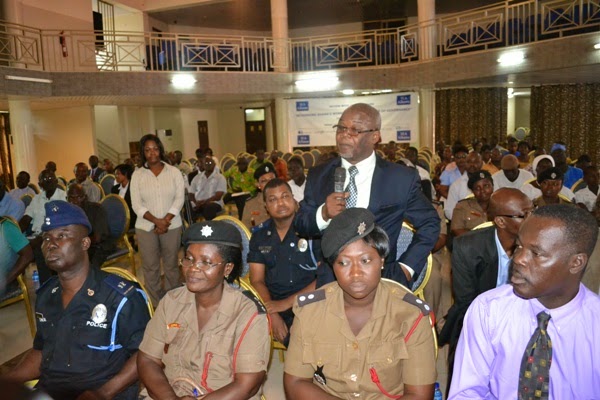
Speaking on political reforms during and consultive meeting with the Institute of Economic Affairs’ Winner-Takes-All (WTA) Advisory Committee in Accra, Dr. Sakara, said the proposal of a five or six-year one term, would also save the country the cost organising election every four year.
The meeting was part of the committee’s series of consultations to solicit views concerning on-going constitutional review process, particularly to address the WTA political system which contributes to the political polarisation of the country.
Mr. Sakara pointed out that the bane of Ghana’s progress has been the lack of continuity in governance, explaining that a prolonged presidential tenure would help to address that challenge.
According to him, countries such as Singapore that started with Ghana after independence, have progressed incredibly due to the benefit of continuity in governance.
“Let us ask ourselves whether our system allows continuity. If no, then we must reform it,” adding that “we start all over after every general elections.”
Dr. Sakara supported calls for an entrenched National Development Plan in a new constitution that would be followed by every government.
He added that there was the need for the more focused development.
Regarding the constitutional reform process, Dr. Sakara cautioned against rushing the process

UK Hosts First Girls' Summit To End FGM

By Jon Benjamin, British High Commissioner to Ghana
Jon Benjamen

Girls and women have the right to live free from violence and discrimination and achieve their potential.  Around the world millions are prevented from doing so by harmful practices such as female genital mutilation (FGM) and child, early and forced marriage (CEFM).   

Forcing a girl into marriage can rob her of the right to choose her own future, and put her at greater risk of not going to school and dying through early childbirth.  Poverty, lack of education and social norms are among the root causes of child marriage.  The African countries with the highest rates of child marriage include Niger, where 3 in every 4 women are married before the age of 18, and Mali and Burkina Faso, where 1 in every 2 women are affected.  

The figures are slightly better here in Ghana but the issue remains a great concern.  In Ghana, 1 in 4 women are married before the age of 18 years; 1 in 17 before they are 15 years old.  CEFM is more common in poorer households and among those with little education.  Education is one of the most powerful tools to delay the age at which girls marry. 

FGM is a human rights violation and can have a lifelong impact on survivors’ physical and psychological health.  The practice of FGM is almost universal in Somalia, Guinea, Djibouti and Egypt.  FGM continues in Ghana despite the fact that there is a law against the practice. Nationally, around 4% of women and girls aged between 15 and 49 years have been subjected to FGM.  In Upper East, 3 in every 10 women and girls have been subjected to FGM and in Upper West this is 4 in every 10. FGM has no health benefits but has harmful health consequences which include severe pain, shock, recurrent bladder and urinary tract infections, infertility, newborn deaths and childbirth complications. 

Things are changing.  In the heart of communities and families around the world, more and more people are saying ‘no’ to these practices.  Thousands of communities have chosen to abandon the practice and are encouraging others to follow suit.  Many governments in developing countries are already working to end these practices and have passed laws and developed plans. In 2012, an African led resolution calling for a ban to FGM was passed unanimously at the UN General Assembly.

In London on 22 July 2014, the UK Prime Minister David Cameron will host the UK’s first Girl Summit, aimed at mobilising domestic and international efforts to end FGM and CEFM within a generation.  UNICEF will co-host the event.  Ghana’s Minister of Gender, Children and Social Protection— Honourable Nana Oye Lithur—will attend the Summit along with the Queenmother of Asante Mampong Traditional Area, Nana Agyarkomaa Difie II.  The Girl Summit will bring together girls, women and community leaders from the UK and other countries, alongside governments, international organisations, faith leaders, civil society organisations and the private sector to agree on actions to end these practices.  The summit will also share success stories and spread good practice in tackling these issues.  It will hear from girls and women who have lived through the ordeal of FGM or CEFM, and from individuals from affected communities who are driving change so that other girls and women can enjoy greater opportunities in the future.

Ahead of the summit, please pledge your support to end these practices at www.girlsummitpledge.com


Jon Benjamin                           
British High Commissioner

Twitter: @JonBenjamin19

Parliament Ratifies Atuabo Free Port Project

By Yaw Kyei
A prototype of the port project
Parliament has ratified a $600 million commercial agreement among the government of Ghana, Lonrho Ports Ghana Limited and Atuabo Free Port Company Limited for the development of the Ghana Oil and Gas Free Port Project.
The project is a public private partnership aimed at creating a specialised port dedicated to providing support to the supply chain in the oil and gas services sector.
It is expected to facilitate the transportation of logistics and support requirements in the petroleum industry and the entire region along the Gulf of Guinea.
The project will include the construction of an airstrip and a helipad to facilitate flight transportation, as well as other infrastructure like power generators, boreholes, office and home accommodations, a naval base, hydrocarbon fuel storage area and roads.
According to a report by the Joint Committee on Finance and Road and Transport, the port, when completed, would provide logistic supply base, offshore fabrication yard, and shipyard facilities to provide a base to undertake rig and ship repairs and other support services.
“The provision of facilities to support rig and ship repairs in Ghana are uniquely located to accommodate the sudden growth in deepwater exploration across the West African coastline with an expected increase in about 300 offshore supply vessels,” it said.
The chairman of the Finance Committee, James Avedzi, who moved the motion for the adoption of the committee’s report, said under the terms and conditions of the agreement, the project would be a private sector joint venture with the government, with total funding by the private developer.
Emmanuel Armah Kofi Buah,
Energy and Petroleum Minister
“The committee was informed that the capital cost for the development is approximately US$600 million which will be funded under a non-recourse project finance,” he said.
When completed, Mr. Avedzi said the project would considerably reduce logistics costs to other oil and gas development in the Western Region.
He added that although 45 per cent interest in the port would be owned by Ghanaian institutions and the government, the country would further benefit from taxes and surface rent to be paid by companies that would operate from the free zone enclave at the port.
As part of the efforts by the government to ensure greater local participation in the development and implementation of the project, he said the project had been subjected to the local content and local participation regulations for the petroleum sector.
The Minister of Energy and Petroleum, Emmanuel Kofi Buah,  in a contribution to the motion, on Wednesday,argued that though the country had two ports at Takoradi and Tema, the facilities were not built to support the requirements of the petroleum industry.
He noted that the project, when completed, would not only turn the country into an oil and gas hub within the West African sub-region but also create about 5,000 jobs.
“As Ghana joins the community of oil producing nations, it will be vital to have facilities such as a dedicated port for oil and gas operations, from storage, fabrications, and maintenance work, all at one location,” he said.
Minority Spokesperson on Roads and Transport, Kofi Owusu Aduomi described the project as very controversial, raising concerns with Lornho’s capacity to build such a port, and indicated that the free port constructed by the company in Equatorial Guinea raised concerns about its capacity to deliver the project.
Mr. Aduomi argued that the Takoradi Port, after the House had approved a loan of £ 194 million to expand its operations, was positioning itself to support the hydro-carbon industry and was currently restructuring and expanding its existing facilities to support the industry.
“The committee visited the Takoradi Port and we are all impressed about the expansion works to support oil and gas,” he said and suggested that the port should rather be developed to meet the demands of the petroleum industry.
After the arguments, the agreement was passed by majority voice vote, as the Minority side, which expressed reservations about the project, abstained.   

Wednesday, July 9, 2014

Forum advocates attitudinal change, not constitutional amendment

By Edmund Mingle, Takoradi
Participants at a Western Regional forum on the constitutional review process yesterday agreed that the problem of the 1992 Constitution was of attitudinal rather than interpretation as has been perceived by some Ghanaians.
According to the participants, politicians sometimes interpret some provisions of the constitution to suit their political expediency, and the problem includes mistrust, exclusive governance, nepotism and political polarisation.
A participant making a contribution at the forum
Some participants were of the view that although the constitution did not forbid any government from pursuing an all-inclusive governance, however, the selfish attitude of some Ghanaians have created the winner-takes-all political system, which has become the bane of Ghana’s politics.
The forum, organised by the Institute of Economic Affairs (IEA), at Takoradi yesterday, aimed at helping the Institute’s Anti Winner-Takes-All (WTA) Advisory Committee to collate views for inputs into the constitutional amendment process.
As one of the series of nationwide consultations, the forum was attended by representatives of political parties, public institutions, civil society groups, traditional and religious leaders, security services, business groups and professional bodies.
Participants also noted that the constitution did not compel a new government to change the heads of public institutions, but the people’s attitude of selfishness, political vendetta and mistrust, has led to the practice becoming a convention.
“No matter how we amend the constitution, these problems would persist if we do not change our attitude,” said a participant, Joseph Kwame Armo, a Counsellor at the Upper Dixcove Traditional Council.
Other contributors believed that Ghana’s democracy has been abused to the extent that democracy has become a threat to the nation’s existence.
They therefore advocated fairness in governance and the interpretation and implementation of the constitution in a manner that would ensure all Ghanaians feel secure.
Participants also expressed worry over the dabbling of chiefs, religious leaders and professors, in partisan politics, describing the trend as a dangerous.
They further bemoaned the situation were politics, which should be a platform to serve, has rather become a lucrative business for some politicians.
Archbishop Palmer-Buckle, Chairman of the WTA Advisory Committee, called for consensus in addressing the problems generated by the Winner-Takes-All system which posed a threat to national cohesion and development.
He said Ghanaians need to collectively agree whether the situation was as a result of “the consitution, its intepretation or the attitude of the people.”  

Sterling Int. Ltd wins Africa Business Award

Sterling International Ltd, Manufacturers of advanced coating systems for the automotive, Industrial and marine industry have received a silver award at the ninth Ghana-Africa Business Awards held in Accra on 30th May 2014.
Mr. Arun Patil(right) Director of Sterling International Ltd,
receiving the award
The award was in honour of the company’s commitment to quality and the significant contributions it had make to Ghana’s development through trade, investment  and other economic exchanges as captured by New partnership for Africa’s Development (NEPAD) initiative.
Mr. ArunPatil, a Director of the Sterling International, said the company was grateful to the organisers of the award scheme for the honour done it.
He said it would serve as a source of motivation for the company to continue to do its best for its clients and the economy in general.
The Ghana-Africa Business Awards Scheme was instituted under the auspices of the Ministry of Foreign Affairs and Regional Integration in collaboration with the Ghana Investment Promotion Centre (GIPC), the Ghana Export Promotion Authority (GEPA), Ghana Free Zones Board (GFZB) and the Ghana Tourism Authority (GTA) to recognize the contributions of business to the growth and development of the local economy and facilitation of trade between Ghana and counterpart African countries.
This year’s event was graced by some members of the diplomatic community, business executives and political heads.
Mr. ArunPatil (right) Director of Sterling International Ltd, receiving the award from NiiKpobiTetteh


Sunday, June 22, 2014

Profile of Dan Abodakpi


Dan Abodakpi for NDC Chairmanship
He has all the attributes needed in a leader to rejuvenate National Democratic Congress.
He is hardworking, highly experienced, knowledgeable, reliable, devoted politician, affable and appeals to the rank and file of the party
It is doubtless that NDC has many credible people, but Ambassador Daniel Kwasi  Abodakpi, one of Ghana’s finest diplomats and astute politicians, stands out as the highly credible to effectively chair the party.
His Vision
He is certain he has the capability to redeem the image of the NDC as the most preferred party in the country, through a rekindling of the spirit of commitment and loyalty and inclusivity for a united party to support government to meet the aspirations of the masses.
With his combined knowledge and vast experience from decades of service in the legislature, diplomatic arena, trade and investment industry and political sphere, Dan Abodakpi, Ghana’s High Commissioner to Malaysia, is the man to reorganize the party for sustained victory and progress.
His objective to quickly revive the party to secure massive victory at the 2016 elections , and make it the party of choice by reawakening the spirit of loyalty among members, and also attract more members, as well as endear the party to floating voters.
Ambassador Abodokpi, a very decisive and a down-to-earth person, is sure his vast experience would be in handy to steer the affairs of the NDC as the National Chairman.
His successful career has seen his through being a Member of Parliament for Keta for 16 years, Minister of Trade and Industry, Provisional National Defense Council (PNDC) Deputy Secretary for CDRs in 1986, and Ghana’s High Commissioner to Malaysia.
Profile
Daniel Kwasi Abodakpi was born on 27 February 1950.   He had his secondary education at the Takoradi Secondary School.  He continued at the Presbyterian Training College, Akropong for Post Secondary Teacher Training Certificate ‘A’ and thence acquired a Diploma in Science and Education from the Advance Teacher’s Training College in Winneba.  He pursued further studies at various institutions of learning namely :
v Certificate in Leaders in Development : Managing Political and Economic Reform, from Kennedy School of Business (Havard – U.S.A.), June 2001
v Attachment – Universities of Minneapolis and Washington State University, International Visitor Education Programme (Fellow of PHELPS STOKES EDUCATIONAL FOUNDATION).
v Attachment – Institute of Social Studies, Moscow – U.S.S.R., 1986

Career Achievement
Prior to his appointment as Ghana’s High Commissioner to Malaysia, Ambassador Abodakpi had a long spell in Public Service in Ghana.   Between 1982 and 1986 (during the early years of the 31st December Revolution), Ambassador Abodakpi held various public positions in Ghana including :
v Regional Co-ordinator for the People’s Defence Committee (PDC) and National Defense Committee (NDC) Tema Region in 1982.
v Special Assistant to Political Counselor for Committees for Defense of the Revolution (CDR) (1984 – 1986) with Cabinet status.
Due to his hard work and dedication, Ambassador Abodakpi was appointed Provisional National Defense Council (PNDC) Deputy Secretary for CDRs in 1986, when the post of Political Counsellor was abolished. A position he held until 1991. 
Following, a Ministerial restructuring in 1993, he became the Deputy Minister for Trade and Industry. He became the substantive Minister for Trade and Industry from January 1999 to January 2001 before a change of government. Ambassador Abodakpi has also been a Member of Parliament for the Keta Constituency for 16 years from January 1993 to January 2009.
Between 2001 and 2006, he was the Ranking Member in Parliament for Trade, Industry and Tourism.  From 2007 to January 2009 he was the Ranking Member for Employment and Social Welfare. In addition to these appointments, Ambassador Abodakpi served on various Boards and Committees in Ghana including:
Member, Divestiture Implementation Committee (1984 – 2001); Member, Ghana Police Council (1985 – 1987); Member, National Economic Management Team ( 1985 – 2001); Chairman, Ghana Tourist Board (1991 – 2001); Chairman, Ghana Export Promotion Council (1993 – 2001); Member, Board of Directors – Irani Brothers Ghana Ltd.( 1986 – 1993); Co-Chairman, The Trade Investment Programme (1995 – 1999); Chairman, Ghana Freezones Board (1999 – Jan 2001).                                     
At the international level, he was elected the First Vice Chairman of the International Trade Centre (ITC) in Geneva for two consecutive years (1995 to 1997).

Legacy
During his long period in Public Service, Ambassador Abodakpi achieved so much. Among his major achievements, the Ambassador led the introduction and implementation of many initiatives in the trade and social sectors that continue to drive the national economy.
As one of the finest trade and investment experts the nation has had, Ambassador Abodakpi is credited for the:
v Introduction of the Free Zones Programme into Ghana in response to challenge of Trade Liberalization and Globalization with the view to providing appropriate incentive framework for attracting FDI and local investments for job creation and export expansion.
v Introduction the Ghana Trade and Investment Gateway Programme as a comprehensive Trade and Investment facilitation framework aimed at making Ghana the preferred Trade and Investment destination into West Africa.
v Development of the Destination Inspection and Computerised Risk Management in place of Pre-shipment Inspection to romote fast and more transparent port operations and clearance procedures at Ghana’s ports.
v Pioneering the introduction of the Ghana Community Network and Ghana Customs Management systems (GCNET and GCMS) which are unique electronic platforms for managing International trade transactions to maximise customs revenue collections at ports of entry.
v Establishment of the Export Development and Investment Fund (EDIF) to help address the problems of cost of credit and credit availability for entrepreneurs involved in Export trade and product development for exports.
v Institution of the National Tourism Award Scheme to motivate practioners in the Tourism Industry.
v Establishment of Ghana’s Diplomatic Mission in Malaysia in pursuit of strong trade and investment ties with ASEAN.
v Construction of infrastructure across country to promote expansion and growth in the traditional kente industry.
v Establishment of Science and Technology Parks in Ghana to towards creating a knowledge economy, as well as mobilizing support for the national industrialization.

Ambassador Abodakpi is married to Mrs. Agnes Carboo-Abodakpi, who are are blessed with children and grandchildren.
Abodapki promises dynamic leadership in NDC as he launches chairmanship bid

By Edmund Mingle
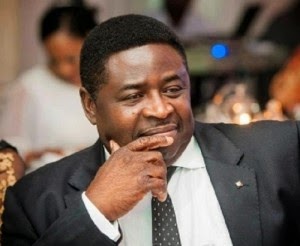
Dan Abodakpi, a former Minister of Trade and Industry yesterday declared his candidature for the chairmanship of the ruling National Democratic Congress (NDC), promising a dynamic leadership to revamp the party.

He also pledged to reconnect the party to its mass base to ensure more inclusiveness in the operations of the party.
Mr. Abodakpi (Left) launching his bid at the
 press conference in Accra
Making the declaration at a news conference in Accra, Mr. Abodakpi, a founding member of the party, said his action was in response to a call to improve save the party from drifting from its core values and mass base.

The conference which was attended by a large number of party supporters and elders, had the theme, “Reconnecting to the mass base and core values of the NDC.”

“The decision of Dan Abodakpi to contest for the position of National Chairman of the NDC is not a personal one; it is a decision borne out of an extensive and deep consultation across the broad spectrum of the Party. 

“The call for the NDC to have a new lease of life, has become a very urgent one; and the call cannot be ignored,” he said.

According to him, his mission was “to reconnect the NDC to its original core values and to its mass base via the strengthening of the structures in accordance with the valued principles of genuine participatory democracy and all-inclusiveness.

“My vision is to provide a new dynamic leadership, the pivot around which the collective energies of the party including the energies of the United Cadres Group, shall revolve,” he said.

He explained that after having played a founding role in giving birth to the NDC, and having also worked and sacrificed alongside many other comrades to build the party and see it through its 22 years of existence, “it will be remiss on my part to ignore the call by the rank and file of the party, to position myself to forcefully engage in a selfless role aimed at walking the party back into the hands of the grassroots.” 

“People suffered to build our much-cherished NDC Party; People have suffered a lot of persecution because of their commitment to building and protecting the NDC; People have lost their lives in the process of building the NDC; and we cannot; and must not allow our dear Party to drift away from its mass base and a huge national appeal,” he stressed.

At 22, he said the NDC has many more years of growth ahead, and it was critical for the party to guard against complacency.
He enjoyed massive support from NDC youth groups
Asked about how confident he was about victory, Mr. Abodakpi, who has held many government positions, said he has the backing of the grassroot members, the cadres and elders of the party who are desirous of the best for the NDC.

Responding to a question about whether his incarceration under the NPP government over alleged crimes of causing financial loss to the state, does not affect the credibility of his bid to chair the NDC, Mr. Abodakpi said that action by the NPP government was as a result of political persecution.

He said that “episode” in his life does not raise credibility question because he was wrongly imprisoned together with his colleagues in the NDC, adding that after his release, he continued as an MP and took up various government positions including being appointed Ghana’s Ambassador to Malaysia.


He explained that what happened to him and his colleagues was a political imprisonment, “otherwise I wouldn’t have been allowed into Parliament after my release.”
According to him, he has forgiving those who persecuted him with the aim of destroying the NDC, saying “vengeance is the Lord’s.”
Mr. Abodakpi becomes the first to officially declare is candidature for the NDC chairmanship post ahead of the party’s October congress.
He is expected to face opposition from the incumbent, Dr. Kwabena Adjei and a Vice Chairman, Kofi Portuphy.